


1. 3D Laser Scanning Technology: An Essential Solution for Digital Upgrading
of Curtain Wall Engineering
In the modern construction industry, as the core component of building facades, curtain walls are
developing rapidly toward complex shapes, integrated functions and digital design. Special-shaped
curved and large-span curtain walls are widely adopted in super high-rise buildings and urban landmark
structures. Traditional 2D measurement methods can no longer meet the stringent requirements for
high-precision construction implementation and quality control.With the in-depth implementation of BIM
technology throughout the whole life cycle of engineering projects, curtain wall engineering has raised
higher requirements for the consistency between design models and on-site construction data. As
a core technical tool connecting digital design and physical construction, 3D laser scanning technology
has become an indispensable solution for the digital upgrading of curtain wall engineering.
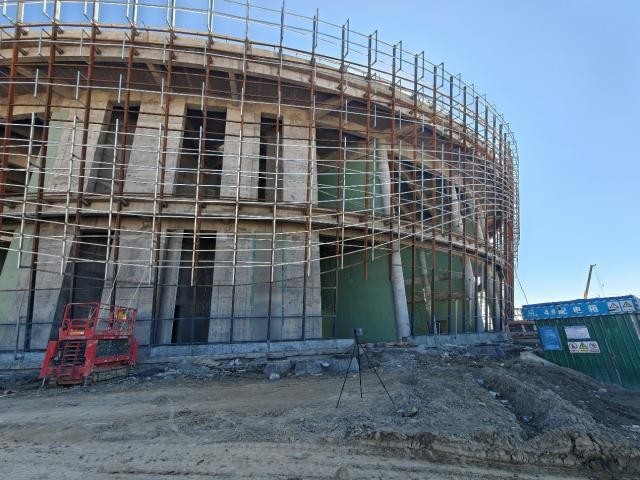
2.Deficiencies of Traditional Solutions: Large Errors and Low Efficiency
Traditional 2D measurement and construction methods have obvious shortcomings in complex curtain
wall projects, which seriously restrict the improvement of construction efficiency and engineering quality.
The core problemsare summarized as follows:
2.1 Complex Special-shaped Curtain Wall Structure with Large Measurement Deviations
For special-shaped curtain wall structures such as curved and hyperbolic surfaces, there
are significant deviations between the measured data of traditional measuring tools and
the design model. Low-precision data cannot support the high-standard construction and
customized processing requirements of
special-shaped curtain walls.
2.2 Low Measurement Efficiency Fails to Meet Short Construction Schedule Requirements
Curtain wall engineering features dense keels and numerous construction nodes.
Traditional manual measurement requires point-by-point positioning and
section-by-section measurement, and the measurement work for the curtain wall of a
single building often takes several days or even weeks.
3. RUIDE Group’s Integrated Solution Fully Empowers Quality and Efficiency
Improvement of Curtain Wall Engineering
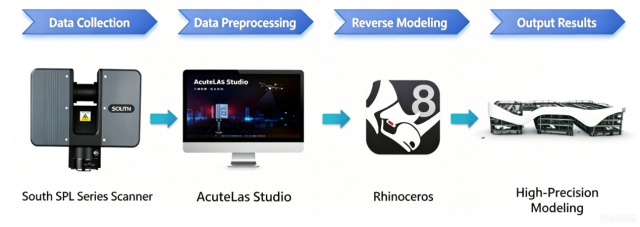
This solution adopts the SPL series Terrestrial 3D laser scanner as the core data acquisition
device to obtain full-coverage on-site spatial data. The acquired point cloud data is
intelligently processed via AcuteLas Studio software, and finally, high-precision modeling
and optimized design of aluminum veneers are realized through Rhino software,
comprehensively boosting the quality and efficiency of curtain wall engineering
construction.
3.1 RUIDE SPL Series Scanner: High Precision, Light Weight and Doubled Efficiency
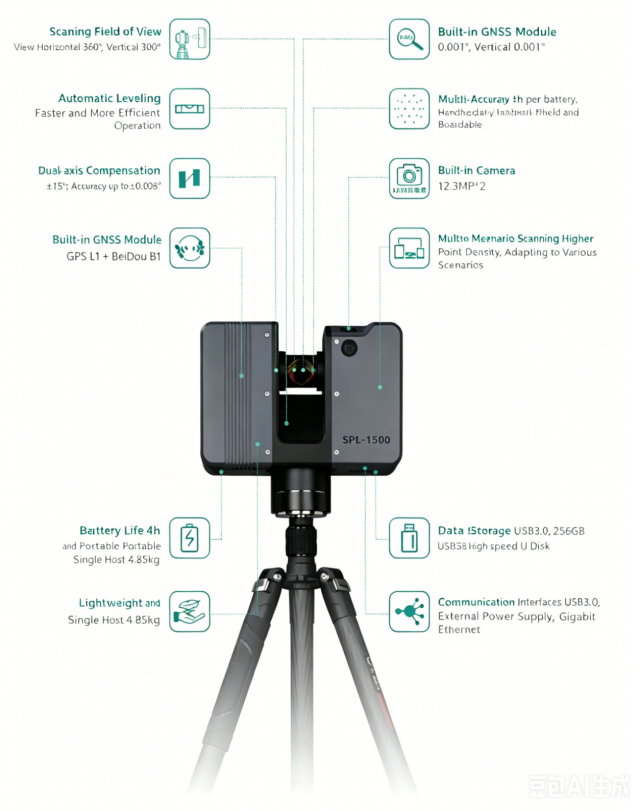
• Multi-range adaptation and millimeter-level high precision:
Equipped with multiple range gears of 1500m, 620m and 180m, it enables millimeter-level
3D scene reconstruction;
• Lightweight body for easy field operation: The net weight is only 4.85kg,
facilitating on-site transportation, setup and deployment;
• Full-color high-definition collection with high detail restoration: Built-in dual
12-megapixel ultra-high-definition cameras ensure clear and recognizable real scene
13-details;
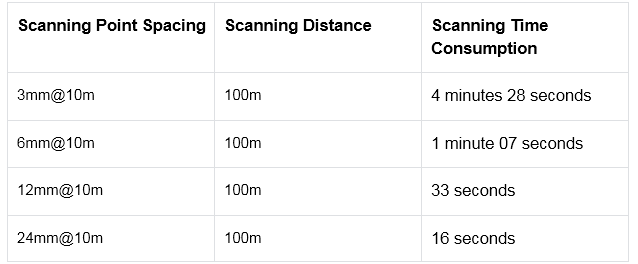
• Ultra-fast scanning doubles field work efficiency: The shortest single-station
scanning time is only 16 seconds, which greatly reduces on-site field operation time and
improves construction efficiency;
• Multi-sensor integration for more accurate data: Integrated with dual-axis
compensation, GNSS, electronic compass, altimeter, thermometer and other multiple
sensors, it monitors the equipment operating status in real time to ensure accurate and
reliable operation data.
4. Software Advantages: Accurate Restoration and On-site Stitching
4.1 Full 3D Point Cloud Restoration Adapts to All Types of Special-shaped Buildings
The equipment can fully capture the 3D spatial form of special-shaped and curved curtain
walls, generate high-precision dense point cloud data, and accurately restore all structural
details such as keel joint connections and profile dimensions.
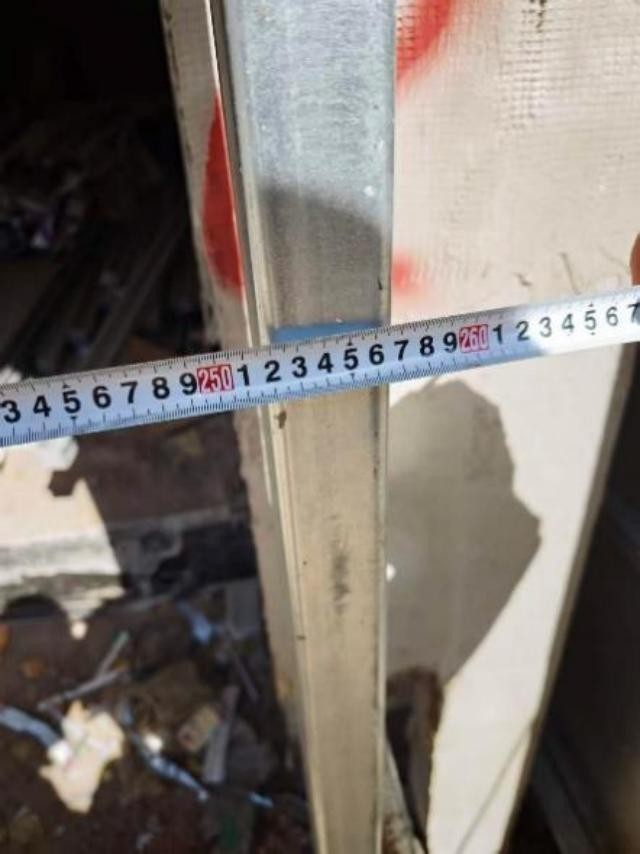
4.2 Complete and High-precision Data Guarantees Construction Quality
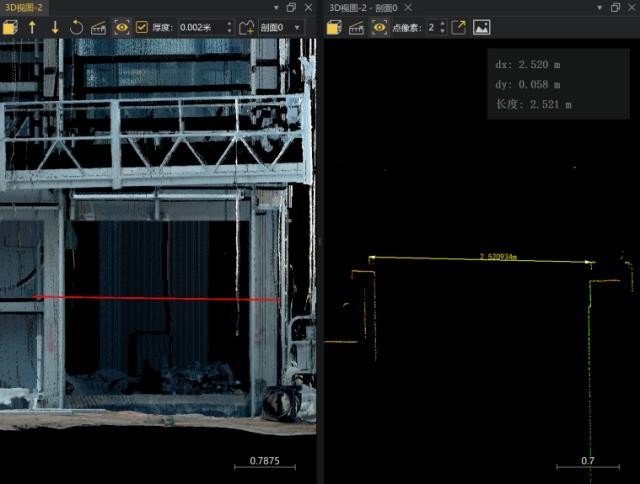
The system supports automatic stitching of multi-station point cloud data with a
comprehensive measurement accuracy of up to 3mm, which can accurately capture the 3D
spatial position, node connection status and installation deviation of curtain wall keels.
The actual engineering measurement deviation can be controlled within 1mm.
4.3 Efficient and Intelligent Operation Adapts to Tight Construction Schedules
The maximum scanning rate of the SPL series scanner reaches 2 million points per second.
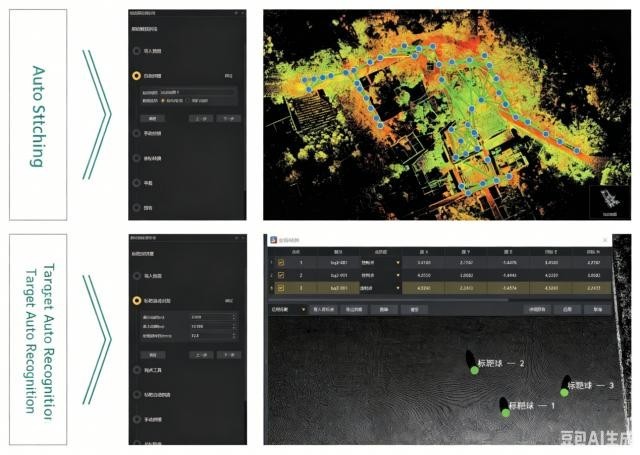
Combined with the one-click automatic stitching and intelligent denoising functions of
AcuteLas Studio software, the data processing process requires no manual intervention,
greatly improving the overall operation efficiency. The scanning efficiency under different
parameters is shown in the table below:
In addition, paired with the exclusive RUIDELidar Field real-time stitching software, the
scanner supports full-process remote scanning operation via industrial tablets. It enables
real-time visual preview of scanning data and synchronous point cloud stitching and
registration. The system supports one-click precise registration of total station data as well
as manual fine adjustment and optimization, realizing real-time visualization and
controllability of 3D point cloud results, which effectively lowers the difficulty of on-site
field operations.
5. Engineering Application Cases
5.1 Case 1: Scanning of Building Curtain Wall Frame and Custom Modeling of Aluminum Veneer
5.1.1 Project Background
The curtain wall project of an urban commercial complex faced prominent problems with
traditional 2D measurement methods, including incomplete data acquisition and large
dimensional deviations. These drawbacks failed to meet the high-precision installation
standards for aluminum veneers, and the lengthy measurement cycle severely hindered
the overall construction progress.
5.1.2 Application Scheme and Implementation Effects
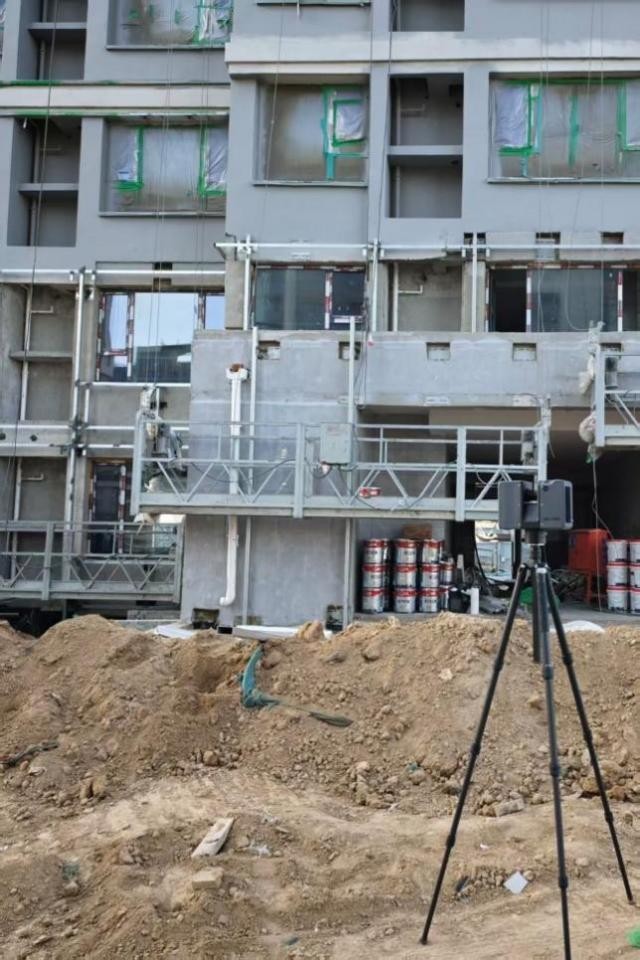
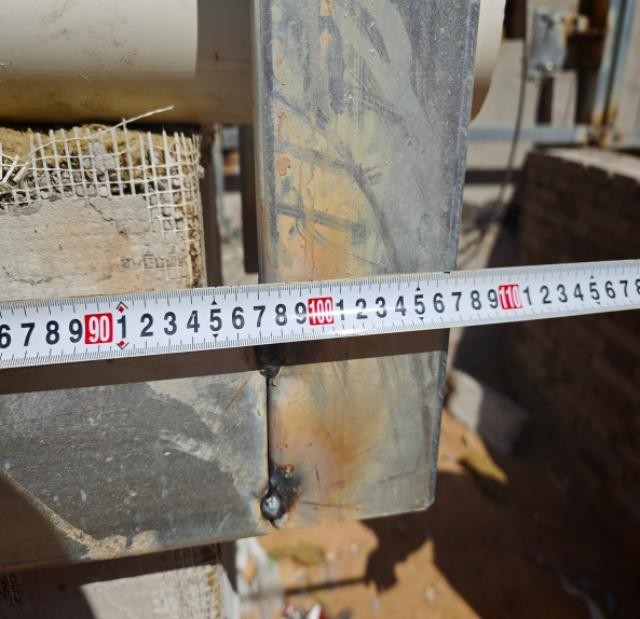
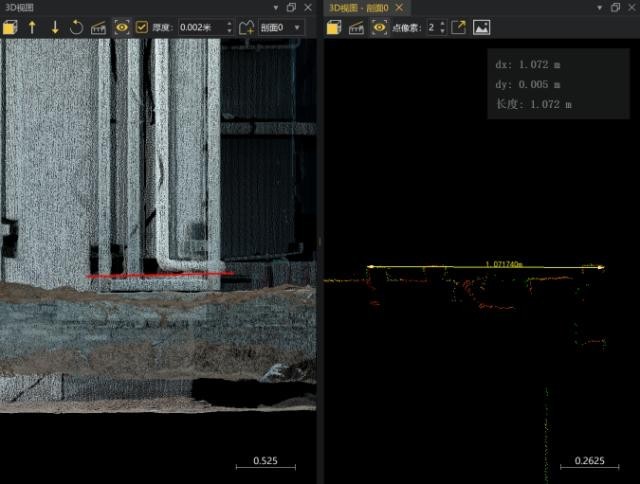
In this project, the RUIDE SPL series 3D laser scanner was adopted for full-coverage
scanning of the curtain wall frame. The full data collection of core area frame was
completed within only 1 hour, fully recording key information such as keel nodes, profile
sizes and spatial positions. After field collection, the actual measurement accuracy reached
2mm via AcuteLas Studio software, providing reliable data support for 1:1 real-scene
modeling of aluminum veneers. With this digital solution, the project measurement period
was shortened from several days (traditional method) to within one day, and the
qualification rate of aluminum veneer processing was increased to more than 99%.
5.2 Case 2: Special-shaped Curtain Wall Frame Scanning and Aluminum Veneer Reverse
Design for Large Stadiums
5.2.1 Project Background
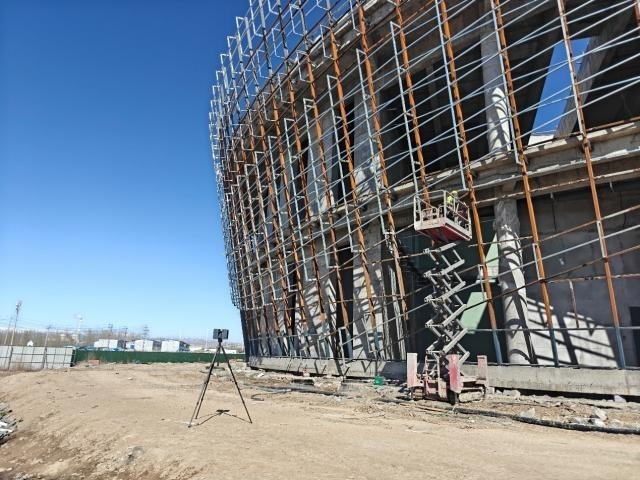
For the stadium project of a provincial large-scale sports center, traditional measurement
methods cannot fully restore the 3D curved surface morphology, making it difficult to
support the reverse modeling and customized design of aluminum veneers.
5.2.2 Application Scheme and Implementation Effects
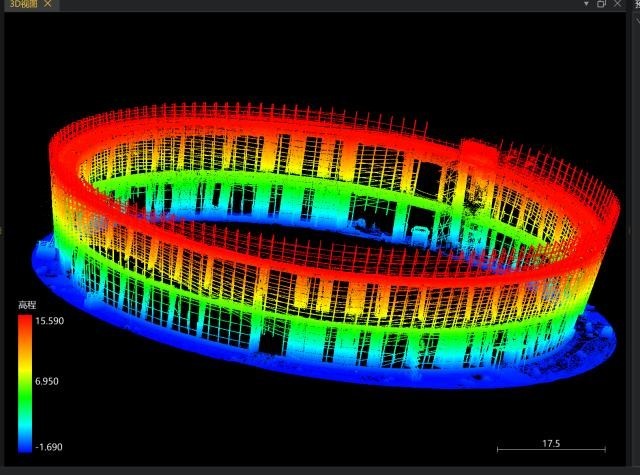
The project adopted the RUIDE SPL series 3D laser scanner to completely collect core data
such as the 3D spatial morphology of the frame and node connection modes. Acuteas
Studio software was used to complete automatic stitching and precise registration of
multi-station point clouds to generate a high-precision point cloud model of the curtain
wall frame.
The processed high-precision point cloud data was imported into Rhino software to carry
out reverse modeling of aluminum veneers based on real-scene point cloud data, which
accurately matched the curved surface morphology and frame installation dimensions,
and completed the detailed design and shape optimization of special-shaped aluminum
veneers.
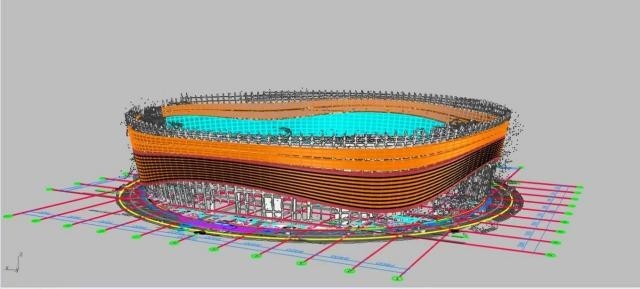
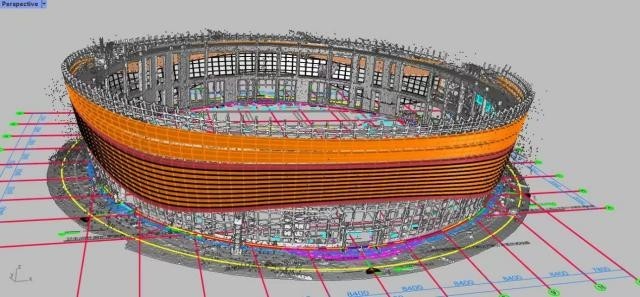
This solution achieves seamless integration between digital design and on-site
construction, keeping curtain wall installation deviations strictly within the millimeter level.
It effectively shortens the construction period, ensures efficient and high-quality delivery
of landmark projects, and has gained wide recognition from clients.



